Broadcom and TP-Link Unveil First Wi-Fi 8 Chipsets and Broadband Routers
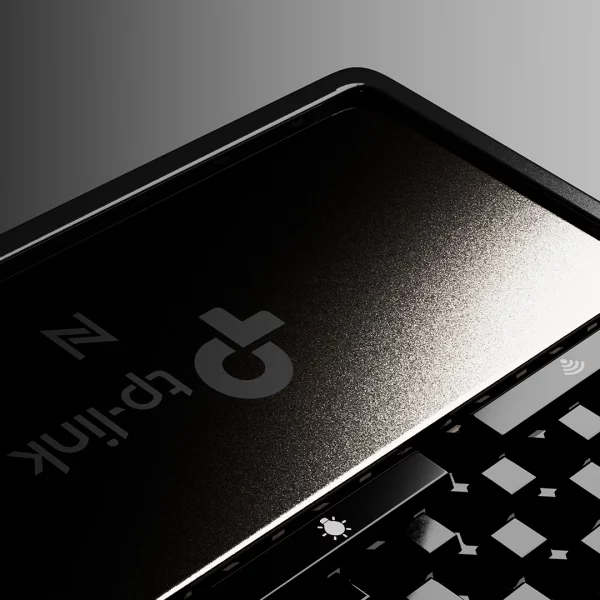
Networking kit manufacturer TP-Link, which develops a lot of broadband routers, WiFi extenders and smart home devices, has today preview their forthcoming Archer 8 router platform – one of the first in the world to support the next Wi-Fi 8 standard (this hasn’t yet been ratified). The move comes a day after Broadcom unveiled their first Wi-Fi 8 chipsets.
Just to recap. The next gen Wi-Fi 8 standard (802.11bn – “Ultra High Reliability“) will focus more on improving network reliability than boosting raw throughput speed (Wi-Fi 8 technology summary and here). The final standard for this isn’t expected to be fully completed until May 2028, but that hasn’t stopped manufacturers developing their own first-generation hardware based on the latest draft specifications.
Scheduled to launch in October 2026, Archer 8 from TP-Link is said to represent the “next step toward delivering more stable, lower-latency connectivity designed for increasingly dense and demanding home environments. It’s the first step in a broader Wi-Fi 8 portfolio, set to roll out throughout 2026 and 2027, which will include a WiFi 8 Mesh System, Travel Router and more“.
Advertisement
The official announcement doesn’t tell us much about the new router and only includes a few teaser images, although the design language looks to be following their current approach. Archer 8 is broadly said to combine advanced thermal engineering, antenna architecture, RF optimisation, and AI-assisted network intelligence into a platform engineered for more stable real-world performance across increasingly congested home environments.
TP-Link’s Planned Wi-Fi 8 Product Line-up
Archer 8 (Wi-Fi 8 Router) — October 2026
Deco 8 (Wi-Fi 8 Mesh System) — Q1 2027
Roam 8 (Wi-Fi 8 Travel Router) — Q2 2027
Wi-Fi 8 Range Extenders and Adapters — Q2 2027
TP-Link claims to have conducted controlled internal lab testing comparing early Wi-Fi 8 implementations against Wi-Fi 7 under simulated real-world home conditions. Initial testing was said to have shown “measurable protocol-level improvements at comparable distances and signal conditions“, including:
- Up to 33% higher throughput through enhanced modulation and coding improvements, helping maintain faster and more stable speeds at longer range
- Up to 24% higher throughput through unequal modulation technologies designed to improve consistency when signal quality varies across spatial streams
- Up to 15% throughput improvement between multiple access points operating under interference-heavy conditions through enhanced spatial reuse coordination
- Up to 30% signal-performance improvement in multi-floor environments for single-device connections, and 10–20% improvement in multi-device environments through TP-Link’s advanced antenna architecture and AI-assisted optimisation
- A 1–3 dB improvement in receive sensitivity on 5 GHz and 6 GHz bands through advanced RF optimisation, supporting stronger and more reliable coverage throughout the home
Sadly we don’t get any raw figures for wireless networking speeds, although it’s always wise to take manufacturer-sourced figures with a big pinch of salt. Accurately testing WiFi performance on modern routers is a laboriously complex task and should always be done by a totally independent group or organisation to get the fairest results.
Otherwise, regional availability and final product specifications will vary by market and will be announced closer to launch. Lest we forget the first run of new Wi-Fi 8 kit tends to be power hungry, often buggy (especially when based on a draft specification) and extremely expensive. Suffice to say that most people will be better off waiting, particularly since the majority of consumers haven’t yet adopted Wi-Fi 7 kit, let alone 8.
Advertisement
Ben Walsh, Marketing Director UK & Ireland at TP-Link, said:
“As the way we live, stream and game at home changes, our networks must adapt and evolve. Archer 8 has been engineered to cater to the reality of home life: multiple devices on the network, walls and floors between the router and user, and interference from wireless devices. The resulting product represents a major step forward in delivering a faster, more reliable connected experience for the entire home and businesses alike.”
At the same time as this news, Broadcom, which helps to develop the semiconductors (processors) / chipsets used by modern routers and other devices, has announced a trio of highly integrated system-on-chip (SoC) devices that support Wi-Fi 8: BCM6772, BCM6774, and BCM6776.
Designed specifically for the high-performance Ethernet routers and mesh network markets, these solutions are said to integrate multi-gigabit performance into a “compact, power-efficient form factor, enabling the next generation of residential connectivity“. The new SoCs are said to consolidate the application processor, network processor, 2.4GHz and 5GHz Wi-Fi 8 radios, and multi-gigabit Ethernet PHY onto a single die.
BCM6772 – The core foundation for mass-market Ethernet routers, extenders, and repeaters
- Integrated 2×2 2.4 GHz and 2×2 5 GHz radios
- Versatile memory controller (DDR4 and DDR5)
- Ultra-compact 15×15 mm FCBGA package
BCM6774 – Optimized for high-volume Ethernet routers and extenders
- Integrated 2×2 2.4 GHz and 4×4 5 GHz radios
- Versatile memory controller (DDR4 and DDR5)
- Ultra-compact 15×15 mm FCBGA package
BCM6776 – Premium Ethernet tri-band routers and extenders (when paired with BCM6718)
- Integrated 2×2 2.4 GHz and 4×4 5 GHz radios
- Dual PCIe Gen3 controllers
- Versatile memory controller (DDR4, DDR5 LPDDR4, and LPDDR5)
- Compact 19×19 mm FCBGA package
Each chip includes a high-performance quad-core CPU complex and a dedicated Network Processing Engine, offloading intensive networking tasks for smooth operation in the most demanding home environments. The BCM677x family also features on-chip 2.4GHz power amplifiers (iPAs) and 3rd generation digital pre-distortion (DPD) technology, which reduces the total bill of materials (BOM) and enables lower power consumption in the 5GHz band. But oddly there’s no mention of the 6GHz band.
Mark Gonikberg, Senior VP and GM of Broadcom’s Wireless and Broadband Division, said:
“Broadcom isn’t just shipping silicon; we are providing the blueprint for the next generation of the connected home. By condensing a complex, multi-chip architecture into a single, power-efficient SoC, we’re enabling our partners to deliver multi-gigabit Wi-Fi 8 mesh systems that are more affordable, more reliable, and easier to deploy than ever before.”
A number of Broadcom’s partners, such as Asus, Sagemcom, NETGEAR, TP-Link and others, have all welcomed the development. Broadcom said they’re “currently sampling the BCM677x family” to these early access partners and customers. So, there you have it, before Wi-Fi 7 is even given a chance to gain some commercial adoption, and we’re already moving on to cannibalise that by shifting the focus to Wi-Fi 8. Mind you, Nokia are already talking about Wi-Fi 9! (here).
Advertisement
We’re all for a fast pace of technological development, but we’re not sure if moving quite this fast is the wisest approach, commercially speaking.






Mark is a professional technology writer, IT consultant and computer engineer from Dorset (England), he also founded ISPreview in 1999 and enjoys analysing the latest telecoms and broadband developments. Find me on X (Twitter), Mastodon, Facebook, BlueSky, Threads.net and Linkedin.













« UK Government Hints it Would Block Bharti Boss Taking Control of BT
Advertisement
Leave a Reply
Privacy Notice: Please note that news comments are anonymous, which means that we do NOT require you to enter any real personal details to post a message and display names can be almost anything you like (provided they do not contain offensive language or impersonate a real person's legal name). By clicking to submit a post you agree to storing your entries for comment content, display name, IP and email in our database, for as long as the post remains live.
Only the submitted name and comment will be displayed in public, while the rest will be kept private (we will never share this outside of ISPreview, regardless of whether the data is real or fake). This comment system uses submitted IP, email and website address data to spot abuse and spammers. All data is transferred via an encrypted (https secure) session.















I still have no reason to get Wi-Fi 7, so I doubt I will bother with Wi-Fi 8
Me neither, but as the old devices go out of support I replace them with something that supports the newest standards, mainly for future proofing, so eventually these would show up. And “I don’t need it” is not a real argument against innovation, if these are getting more reliable, utilize bandwidth better, etc, we will all benefit from it eventually.
But a lot of these devices can last for years and even going out of support may not be a reason to get rid of them. My router have not been updated for over a year, but it is still working fine. My phone i will keep for as long as I can,. I only got it last year, so I hope it will keep working for at least another 3-4 years.
Nothing in this house requires Wi-fi 7, even if i used the Wi-Fi on them.
Sure if my router goes belly up for some reason then I would replace it with a more up to date version. I am not sure if I would bother paying extra for Wi-fi 7 or Wi-fi 8 when it comes out as I don’t need them. But if the price is right I may do.
It’s like F1 use to be, their tech drifted down to the Common Man!
This more than likely will be rolled out and then in 4 years will have the phones and laptops that can use it.
Mean while people with G5 phones will complain of slow broadband!
But it’s nice to see tech is still progressing. Even if the consumer market is being squeezed by AI Monster.