Virgin Media O2 Satellite Service Goes Live with 4G Mobile from Space
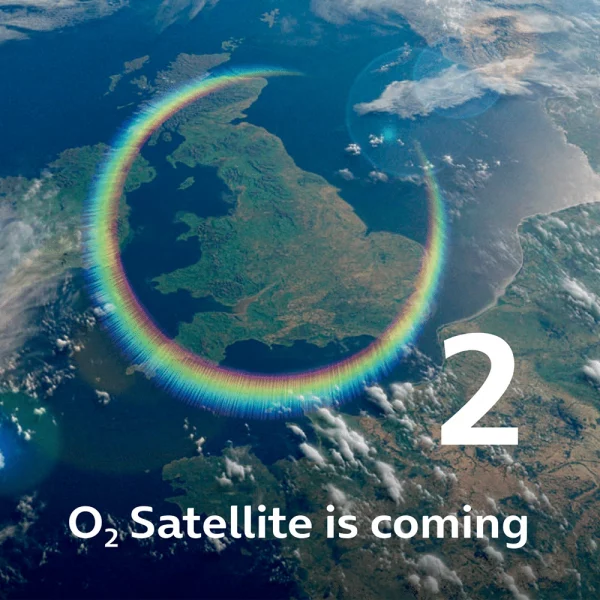
The United Kingdom will today become one of the first countries in Europe to go live on Starlink’s latest Direct to Cell (DtC) and satellite based 4G mobile data (broadband) connectivity, as mobile operator O2 (Virgin Media) switches-on its new O2 Satellite service for customers. Better yet, it’ll only set most customers back an extra £3.
At present around 650 of Starlink’s (SpaceX) c.9,800 satellites in Low Earth Orbit (LEO) support DtC (aka – Direct to Device) technology, which technically enables them to deliver global coverage of a fairly basic 4G mobile roaming service and supply it directly to unmodified Smartphones on the ground. The goal in the UK, at least for now, is to make it possible for customers of O2’s service to stay connected in even some of the remotest areas, where mobile signals either fail to reach (“not spots“) or are less reliable.
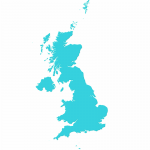
The new service, once applied, effectively boosts O2’s UK landmass mobile coverage from 89% to 95%, delivering a coverage uplift equivalent to an area around two thirds the size of Wales. The service is designed to complement O2’s existing mobile network, and customers will connect automatically when traditional cellular coverage is unavailable.
Advertisement
Speaking of which, O2 Satellite will also continue to keep customers connected in the rare event of a local (terrestrial) cellular network outage too, which gives the network operator significantly more resilience. But at launch there will be some limitations, which means it can currently only support text messaging and limited data connectivity across specific apps like WhatsApp, Messenger, Google Maps and more.
O2 Satellite Compatible Apps at Launch:
- AccuWeather
- AllTrails
- BBC Weather
- Facebook Messenger
- Google Find Hub
- Google Maps
- Google Messages
- Google Personal Safety
- Samsung Weather
- X
- Yahoo Mail
Otherwise, the service, which is available as a £3-per-month bolt-on and will be included at no extra cost for all ‘Ultimate Plan’ customers in the “near future“, is initially also only available to customers with the latest Samsung smartphones (inc. Samsung Galaxy S25, S25+, S25 Ultra and S25 Edge). Support for other devices, manufacturers and apps will be introduced “soon“.
Lutz Schüler, CEO of VMO2, said:
“This is a defining moment for UK mobile connectivity and a statement of our intent to keep innovating and ensure our customers can stay connected no matter where they are. By launching O2 Satellite, we’ve become the first operator in Europe to launch a space-based mobile data service that, overnight, has brought new mobile coverage to an area around two thirds the size of Wales for the first time.
We already have the UK’s largest 5G+ footprint and we’re not standing still, investing heavily this year in our mobile network to give O2 customers a brilliant, reliable service that they can depend on.”
Baroness Lloyd, Minister for the Digital Economy, said:
“This is a major achievement for the UK and demonstrates leadership in next-generation connectivity. Being the first in Europe to launch direct-to-device satellite data services puts the UK firmly at the forefront of mobile innovation. O2 Satellite is a boost for growth and connectivity and a strong signal of the UK’s leadership in the global digital economy.”
Stephanie Bednarek, VP of Starlink Commercial Sales, said:
“Delivering Starlink Direct to Cell in partnership with Virgin Media O2 underscores the importance of keeping people connected no matter where they are. For the first time, millions of people across the UK will have access to data, voice and video through apps, and messaging in remote areas where terrestrial coverage isn’t available.”
The development won’t come as much of a surprise because VMO2 had already said the new service would launch during “early 2026“. In addition, a number of ISPreview’s readers had also spotted (here) that it was live this week on the MCC (Mobile Country Code) of 234 (UK) and MNC (Mobile Network Code) of 02.
The service is currently harnessing only part of the B3 band (1800MHz) and so should be able to work indoors too, albeit with some limitations due to the significant signal attenuation that occurs when passing through walls etc. Overall this sounds like an incredibly useful and seemingly quite affordable add-on, which will be of particular interest to those who travel a lot around the UK (business or otherwise) or live in poorly served areas.
Advertisement
However, O2 Satellite is not the only DtD service gearing up for launch in the UK this year, with Vodafone (VodafoneThree) working alongside AST SpaceMobile to launch a similar product (here). Suffice to say that it will be interesting to see how the two services compare once both fully live, particularly in terms of price and performance. At £3 extra per month O2 has set quite an affordably cheap bar for Vodafone to beat.
On the flip side, it’s clear that at launch O2’s new service will be significantly hobbled by its limited device support, but hopefully they’ll improve that at pace in order to help fully realise the potential for this sort of service.
Finally, for those wondering why the service doesn’t deliver more than 95% coverage, that’s due to two reasons. Firstly, the service is currently limited in areas close to international borders due to regulation, and secondly, the service currently only works up to the 58th parallel North (about Inverness), due to the current orbit of satellites limiting coverage in the most northern latitudes. But this is expected to improve with time (Starlink’s main non-DtC broadband network already extends beyond this).






Mark is a professional technology writer, IT consultant and computer engineer from Dorset (England), he also founded ISPreview in 1999 and enjoys analysing the latest telecoms and broadband developments. Find me on X (Twitter), Mastodon, Facebook, BlueSky, Threads.net and Linkedin.








« Virgin Media O2 Warn Customers to Watch Out for Fake 5G SIM Upgrade Emails
Advertisement
Leave a Reply
Privacy Notice: Please note that news comments are anonymous, which means that we do NOT require you to enter any real personal details to post a message and display names can be almost anything you like (provided they do not contain offensive language or impersonate a real person's legal name). By clicking to submit a post you agree to storing your entries for comment content, display name, IP and email in our database, for as long as the post remains live.
Only the submitted name and comment will be displayed in public, while the rest will be kept private (we will never share this outside of ISPreview, regardless of whether the data is real or fake). This comment system uses submitted IP, email and website address data to spot abuse and spammers. All data is transferred via an encrypted (https secure) session.














While I realise they might have to charge £3 a month for this additional service due to the additional cost of providing it, I think it should be free for people who live in the areas where the signal is so bad (and non-existent) to have to need this. It doesn’t seem fair that O2 haven’t provided a strong enough cell signal from masts, that people then have to pay yet more just to get a basic O2 signal over this satellite based system.
No one is forced to be an O2 customer, so why should O2 be forced to hand it out for free? What criteria would you set? If it doesn’t work at home, that’s what WiFi calling is for.
The only time I could see that working is if O2 promised a good signal but their coverage map is wrong.
@Ivor – “No one is forced to be an O2 customer”, no you’re right, and people could change to other networks that also have poor/non-existent mobile coverage. What I’m saying, and mentioned, was that for people who live in known poor coverage areas, this alternative of satellite coverage should be the standard what you get, not an additional cost over and above because O2 (and other networks) simply haven’t invested in making their existing cell based networks good enough.
I welcome other networks also introducing this alternative service in the future, and hope that in doing so it brings some competition to the market which will hopefully bring down prices (to match those of traditional mast based cell coverage)
bit naughty claiming Samsung exclusive when I have a phone thats equally compatiable (Pixel 9 Pro Fold).
I hope they open this up sooner than later.
@jennifer90s: Apple phones aren’t on O2’s DtC yet for multiple reasons. First, hardware and safety: satellite links require higher transmit power, which heats the battery and stresses the phone. Samsung’s Galaxy S25 handles this aggressively, while Apple prefers to wait for a denser satellite network to protect battery, temperature, and regulatory limits. Foldable phones like the Pixel 9 Pro Fold add extra complexity — multiple antenna positions, changing RF characteristics, and more thermal management challenges — making certification slower as engineers have to certify the connection in every physical configuration (folded, Unfolded and “tent” mode), which effectively doubles the testing time before it’s safe to release.
Second, network control: Samsung uses open 3GPP NTN standards that O2 can deploy directly. Apple has a proprietary Globalstar setup for emergency messaging only, so its software and network agreements prevent it from connecting to Starlink DtC until Apple can build, test and ship a dedicated iOS update before iPhones can join Starlink DtC.
In short: Samsung prioritises connectivity now, Apple prioritises safety and exclusive network control, and foldables face additional RF/thermal certification challenges, so support for both Apple and foldable devices will likely come later.
I don’t understand the 89% figure, is this only 4G?
Vodafone and O2 had well above 90% years ago on 2G/3G.
Why are there designated apps? I miss Signal and Telegram (at least).
I understand we couldn’t stream videos on it, but it would be more transparent if they simply limited the bandwidth to 64 or 128 kbps, but you use this BW as you need. (This is how some airlines are doing their “chat only” on-board wifi, and it is perfectly fit for the purpose.)
I am also not sure if this would be compatible with the net neutrality requirements.
If your phone sends 512kB of data then why should they care which of your installed apps originated that data. In fact surely the only way they could even know which app is if they obliged you first to install some sort of monitoring proxy on your phone. I smell “devil in the detail” coming up with all this.
No need to “install” anything. They could either have the phone’s own software enforce the restriction as part of approving it for satellite use, or they could implement that restriction within the network in the same way that public wifi operators do.
UK MNOs have been doing similar things for years, eg Voxi offer unlimited video/music streaming regardless of how much general purpose data allowance you purchase. Nothing is installed on the phone to achieve that.
Ofcom isn’t going to care, particularly if there’s a technical justification, and especially given that this government has issued the regulators with a “pro growth, pro business” directive.
@htmm: O2’s Direct-to-Cell (DtC) service is initially positioned as an emergency-style fallback for situations where users lack normal mobile or internet coverage. The limited list of approved apps reflects the need to tightly manage extremely scarce satellite radio capacity, prioritising uses such as text messaging and small images. If O2 allowed open IP traffic, even when capped at 64–128 kbps, there would be a real risk that poorly behaved or background-heavy apps could saturate the satellite beam, causing quality-of-service guarantees — particularly for emergency messaging — to collapse.
Signal and Telegram are absent not for ideological reasons, but because they do not yet fit the tightly restricted traffic profile required at launch; they could plausibly be added later once O2 has operational experience and additional satellite capacity becomes available.
Comparisons with airline ‘chat-only’ Wi-Fi are misleading, as airline systems operate a single, tightly controlled onboard LAN with far fewer users, greater per-user capacity, and no obligation to preserve app integrity or comply with mobile-network regulations.
With regard to UK net-neutrality rules, O2 is likely on firm ground because DtC is being offered as a specialised fallback or emergency connectivity service, rather than as a replacement for standard mobile internet access. If the service were ever expanded or marketed as a general-purpose mobile data substitute, that regulatory position would almost certainly need to be reassessed.
You don’t have to install some “proxy” for them to know you’re sending data to whatsapp, they will know because of things like the ports in use, the IP destination addresses being that of whatsapp etc. The reason why is because they will have either local CDNs / equipment in their data centres that connect to whatsapp so they’re not paying a charge for that data because it’s in their own data centre already. Lots of big names like Facebook, Netflix, Youtube all do that, it’s why networks like Voxi let you use all that stuff for free. Because it doesn’t cost the telco anything. They’re not installing spy software on your phone to figure out which apps you’re using. The same way I can block youtube or tiktok on my home network via adguard is how they do it.
£3 a month for a very restricted service on specific devices only. For £4.50 a month I get 500 kbps up and down, unlimited data & unrestricted usage from my Starlink Mini, it even supports WiFi calling.
They will have to try a lot harder to get me to change over.
Yes but no one wants to carry a mini around on their backpack. This is however a legitiate threat once rolled out to the likes of Flexifone and especially Honest mobile who will no doubt be wondering if this is their end.
@ Simon
That’s not my use case, a Mini is perfect for me, agreed it won’t suit everyone.
What is this plan?
This feels like an aggressive rush to be first to market, which is totally understandable given Voda/AST are probably not a long way behind. Didn’t expect it to be this quick after the Ofcom approval tbh!
Hopefully the app list and compatibility grows, I can see a really future here for IOT devices so hopefully that’s on the to do list