Fibrus MD Warns Ofcom May Have Killed Private Investment in Rural UK Broadband

The Group MD and CFO of alternative network ISP Fibrus, Colin Hutchinson, has today spoken to ISPreview about the challenges of building full fibre networks in rural areas, their approach to market consolidation and on how they fear the outcome of Ofcom’s recent market review “entrenches Openreach’s dominance” and “all but kills the prospect of future private investment in many rural areas“.
For those who may be unfamiliar, Fibrus and network delivery partner Viberoptix have spent the past few years rolling out a new Fibre-to-the-Premises (FTTP) broadband network across Northern Ireland, before more recently expanding into Cumbria (England). The work has been supported by a mix of public and private investment (public funding has mostly been used for their rural builds).
The provider’s full fibre network, which recently achieved a positive take-up rate of 30% (here) – rising to 40% for their subsidised network footprint in N.Ireland, currently covers over 465,000 UK homes (more than 330,000 of those are in N.Ireland) and they now have a total of 142,000 connected customers.
Advertisement
Suffice to say that the operator has been making some good progress and Colin indicates that this growth, combined with the tapering down of their build programme, “will see us achieve cashflow breakeven within 12 months“. In fact Fibrus currently expects to be “generating cash to repay our investors” in around 5-years’ time.
Despite all the positives, Colin complains that Fibrus has been left “deeply disappointed” by the outcome of Ofcom’s recent 5-yearly Telecoms Access Review 2026 (TAR), which he says “failed” to address a claimed “margin squeeze” being faced by rural broadband providers.
“Ofcom’s rules force operators to pay up to 20 times as much for Openreach PIA products in rural areas as compared to urban areas,” said Colin, who feels their complaints have been “ignored“. But Ofcom and the government have rejected this argument, which the Group MD warns could “entrench Openreach’s dominance” and “all but kills the prospect of future private investment in many rural areas“.
The issue of market consolidation also came up in our new Fibrus interview. Colin’s perspective is that a business plan requiring mergers and acquisitions (M&A) is a “poor” one and their approach is instead based on continuing to be a “strong independent regional operator“. But they also say they’ll be “opportunistic and take advantage of any [consolidation] deals that make sense“, before adding that they aren’t dependent upon it.
Advertisement
The Fibrus Interview with Colin Hutchinson
Q1. Before we get started on other questions, can you provide a general update on Fibrus’ current network coverage (premises passed), customer take-up and total level of funding/investment?
Colin’s response:
At the end of January we passed 465k homes with 142k connected customers, just over 30% penetration up 4 points over the last 12 months despite 60k new prems being added to the network. Our ARPU has also increased by 15% over the same period.
We’ve invested around £750 million to date, £300 million has come from government subsidies with the balance from our senior debt facility and shareholders.
Q2. Firstly, congratulations on having recently secured the £34.6m (public subsidy) Project Gigabit broadband roll-out contract to reach 9,000 of the hardest to reach rural homes and businesses in N.Ireland. This of course comes shortly after Fibrus completed, on time and within budget, the Project Stratum contract for the same region, which expanded full fibre to reach a further c.81,000 premises in more challenging locations.
Colin’s response:
We were delighted to complete the Project Stratum contract on time and within budget. The Project Gigabit NI contract allows us to build on this success and roll out to more underserved rural communities. These achievements are testament to the skill and dedication of the team of over 600 people working all day every day to bring world class broadband to rural and underserved communities in NI and Cumbria.
From a recent independent Economic Impact Assessment, we know of the huge benefit fibre connectivity makes in terms of levelling up opportunity in rural parts of the country.
Q3. What were the biggest challenges you faced in getting Project Stratum delivered on time and do you expect the new Project Gigabit deployment, which will presumably reach into even more remote and rural areas, to be even more of a challenge than Stratum?
Colin’s response:
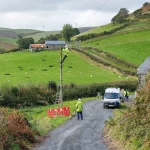
Constructing network in remote rural areas presents various build challenges which aren’t faced by urban focused network builders. Our construction arm, Viberoptix, has expertise in building in rural environments across Northern Ireland and Cumbria.
The additional NI Gigabit premises are spread across the whole of NI in similar areas to our Stratum build so we don’t anticipate these presenting a bigger challenge than Stratum.
Please flick over to Page 2 in order to finish reading the full interview.
Advertisement






Mark is a professional technology writer, IT consultant and computer engineer from Dorset (England), he also founded ISPreview in 1999 and enjoys analysing the latest telecoms and broadband developments. Find me on X (Twitter), Mastodon, Facebook, BlueSky, Threads.net and Linkedin.






« Ookla Examine Impact of Peak Time UK and EU Mobile Network Congestion
Advertisement
Leave a Reply
Privacy Notice: Please note that news comments are anonymous, which means that we do NOT require you to enter any real personal details to post a message and display names can be almost anything you like (provided they do not contain offensive language or impersonate a real person's legal name). By clicking to submit a post you agree to storing your entries for comment content, display name, IP and email in our database, for as long as the post remains live.
Only the submitted name and comment will be displayed in public, while the rest will be kept private (we will never share this outside of ISPreview, regardless of whether the data is real or fake). This comment system uses submitted IP, email and website address data to spot abuse and spammers. All data is transferred via an encrypted (https secure) session.















New article in the FT (Paywall) on altnet finance :- https://www.ft.com/content/c99feda2-e700-4207-a761-30f71f1cdec8
I see he still hasn’t managed to explain that even though Openreach has had to invest more per rural premises served, and any altnet that does their own physical work would have to do the same, PIA customers such as his own company should magically have that reality abstracted away with BT Group shareholders bearing the cost.
I’m sure those same premises will eventually enjoy Openreach FTTP regardless of whether or not Fibrus gets there, and with a lot more ISP choice to boot.
Competition that relies on the regulator hammering your largest competitor, is competition that should not exist. The PIA scheme is arguably already too generous. I’m glad it hasn’t been made worse.
I wouldn’t be surprised if Ofcom tried to push BT too far they might take it to judicial review. I understand some of BTs investors are pushing them to kick back more. If you don’t like the price Openreach are charging for PIA feel free to build your own.
Q4. When does the purchase of Ogi complete?
I heard that too… he’s CFO and says mergers are the result of a bad business plan. but merging with another ISP Okay then.. admitting your business plan was bad then?
Me thinks , based in the rural Dankshire town with loads of properties, altnets are a waste of time. We had one lot promising to start in 2024, nope, ran away. The other lot got halfway and scarpered.
OR got it all done in about 6 months, spine and to the consumer. I miss the daily visits adding another property on to the aggregator.
The halfway ones were wandering around a few months ago, looking for stragglers, hahaha I told them it was all done, spot the little grey boxes on the walls. Going to be interesting in a years time when the halfway ones contacts end.
This Fibrus guy should work on improving the quality of service for his customers before sticking his nose in to the affairs of Openreach.
I second this, Fibrus FTTP connection stable for 2 weeks then constantly disconnecting. Openreach FTTP connection 6 months in no issues.
It’s wonder he isn’t crying out for more government handouts
The business case for FTTP Altnets, was always pretty dubious in a value driven market like the UK. It’s like companies building more than one Powerline, Gas connection, or Water connection to peoples houses. The whole idea of competition, in a market of Monopoly providers is pretty bizarre. Public money should have been used to build a Single unified Open FTTP network throughout the UK. There can never really be real competition in supplying Utilities like this. Privatisation has been a disaster for UK citizens. And has increased the costs, to build a National UK FTTP network, exponetially. With the Government literlly, throwing £££ money at private companies, for little real progress or value…