Govt sets out new UK rules to protect subsea internet cables from sabotage
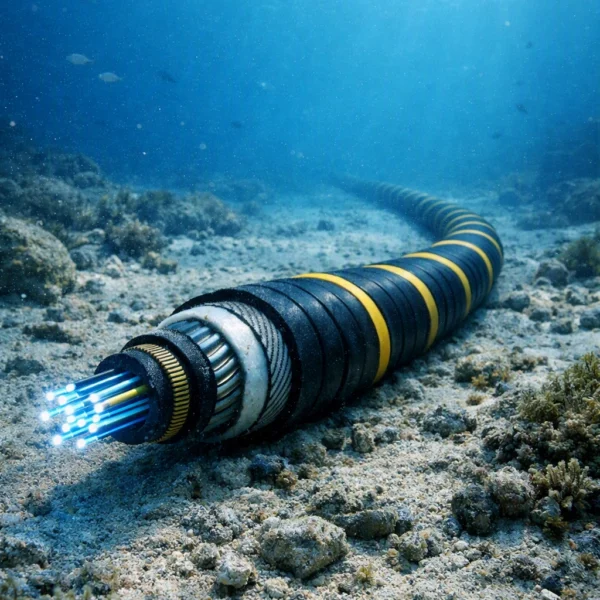
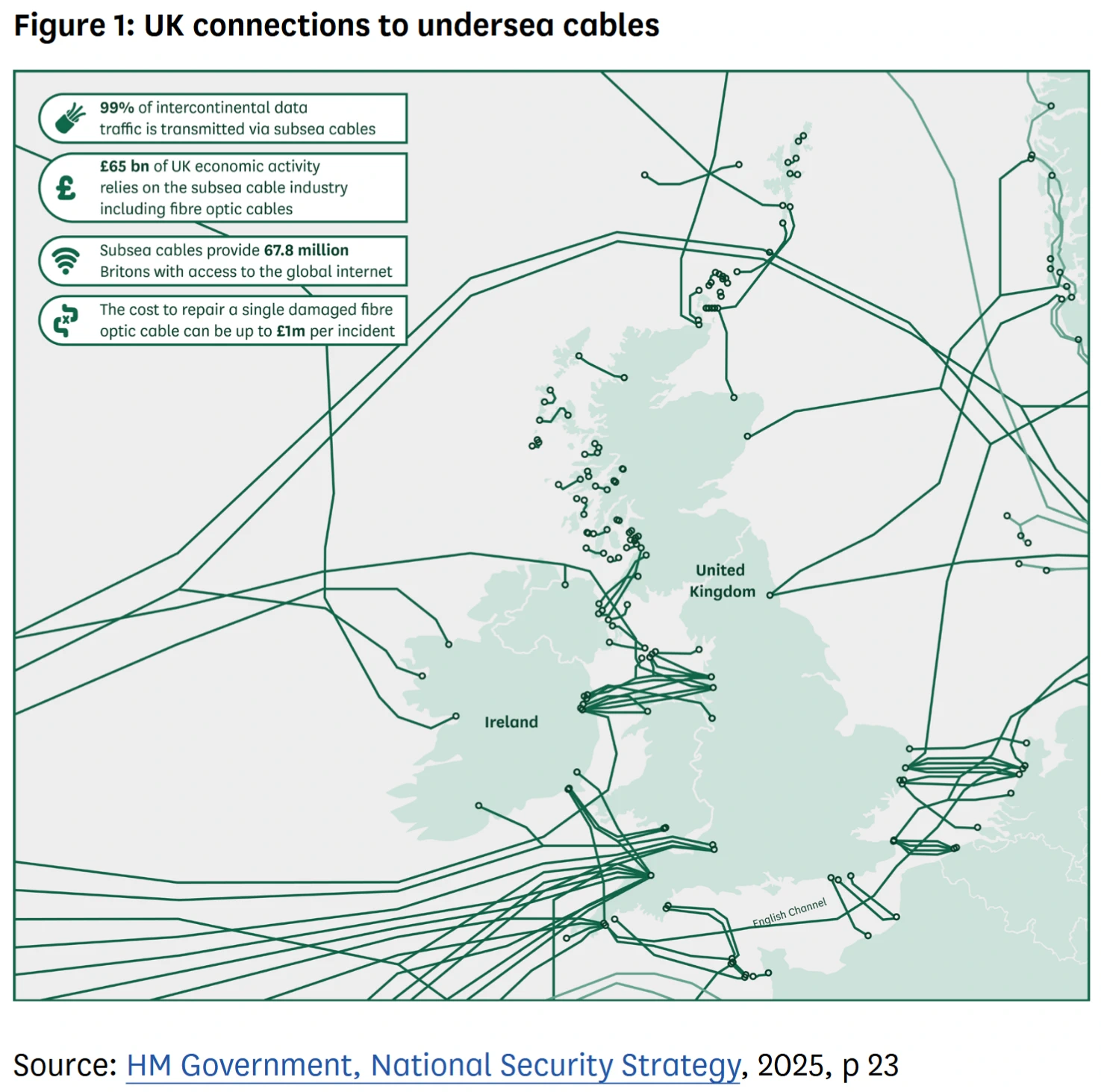
The UK Government (DCMS) has today published a new White Paper, which sets out their final proposals for a new criminal penalties regime (i.e. bigger fines and longer prison sentences), as well as new telecoms infrastructure security and resilience duties, to help tackle those who damage critial subsea infrastructure (CUI) essential for UK broadband access and trade.
Subsea fibre optic cables often suffer damage. According to the United Nations ICPC (here), an average of 150 to 200 faults occur globally each year and require about three cable repairs per week (97% of such breaks are NOT malicious). In addition, it usually takes a few weeks to fix a break, albeit depending upon the type of break, its depth, weather conditions and various other factors.
Advertisement
Most of the cable breaks that do occur are usually caused by accidents due deep sea fishing trawlers, as well as ships accidentally dragging their anchor over them. Not to mention abrasion, equipment failure or marine life deciding to take a nibble (the latter is only an issue on smaller / older cables that haven’t been buried). But over the past few years the act of deliberate sabotage has also become a real problem (example).
The good news is that new technologies, such as the use of Distributed Fibre Optic Sensing (DFOS) or Distributed Acoustic Sensing (DAS) on subsea fibre optic cables, is gradually making it easier to monitor activity around such infrastructure and to identify the responsible ships or submarines etc. But punishing those responsible remains a challenge.
The existing Submarine Telegraph Act 1885 is fairly weak and can only impose a £1,000 fine, which isn’t a deterrent against costly cable damage accidents related to negligence or sabotage, particularly those that occur in the grey zone of conflict (i.e. the deliberate use of civilian vessels to cause damage). Not to mention the difficulty of extending any law beyond the UK’s own territorial waters and the lack of resources to protect so many cables.
The Government has thus spent much of the past year looking at how they could update these rules to make them tougher. The new White Paper helps to formalise their proposals by setting out legislation proposals for public consultation in four areas.
Advertisement
Key Changes
➤ Tougher penalties – including lengthy prison sentences (up to 14 years) and unlimited fines – proposed for those who intentionally, recklessly or negligently damage the undersea cables and pipelines carrying UK’s gas, electricity and international data
➤ New security and resilience laws that require subsea telecoms cable providers to better identify and manage risks to vital infrastructure, while also responding to security compromises and reporting them to the relevant Governments.
➤ The Government would also gain new powers to require telecoms providers to take steps to protect cables from threats such as sabotage or espionage, alongside new safeguards for fibre optic sensing technology, which can detect activity at sea but could pose national security risks if sensitive data fell into the wrong hands.
The government make a point in the paper of needing to distinguish between intentionally, recklessly or negligently damaging such cables. For example, the maximum penalty of up to 14 years’ imprisonment would apply to intentional conduct, then 10 years for reckless conduct and 2 years for grossly negligent conduct (the latter could potentially apply to some past examples of damage caused by fishing trawlers and other ships). Take note that acts of sabotage clearly linked to a hostile state can already carry a risk of life imprisonment for the most serious cases, but proving that is often difficult.
However, tackling the complex problems caused by the territorial extent of such offences is another matter (e.g. those that occur beyond the UK’s territorial sea), which will require further consultation. “We are also consulting on whether further measures are needed to make it easier for infrastructure owners and operators to pursue civil claims to recover repair costs and other financial losses when CUI is damaged,” said the paper.
A designated regulator would be needed to oversee compliance with the new framework for some of this, supported by monitoring and enforcement powers and penalties aligned closely with existing legislation. At present it’s unclear if this would be a new body or an expanded responsibility for an existing one, such as Ofcom (as if they don’t have enough on their plate already).
Telecoms Minister, Ian Murray, said:
“Undersea cables are the hidden backbone of modern Britain, carrying the data we rely on every day to message friends and family, do our banking, and run our businesses.
The threats we face have changed dramatically, with suspicious Russian activity around critical undersea infrastructure, yet some of the laws protecting these vital connections date back more than a century.
We intend to modernise those laws with tougher penalties, stronger requirements on industry and new powers to protect our national security, making sure the UK’s critical infrastructure is fit for the threats of today and tomorrow.”
Suffice to say that tougher laws are badly needed and will be welcomed, although it will take more than that to create a truly effective deterrent against deliberate sabotage (a larger navy with more ships that actually work wouldn’t hurt). As an island nation we have good reason to be highly protective of our subsea links, not only for fibre but also energy etc.
Advertisement
The publication of the White Paper marks the start of a 12-week public consultation on the proposals, seeking views from industry, experts, and the wider public to help shape the final proposals (due by 23:59 on Thursday 14th January 2027).



Mark is a professional technology writer, IT consultant and computer engineer from Dorset (England), he also founded ISPreview in 1999 and enjoys analysing the latest telecoms and broadband developments. Find me on X (Twitter), Mastodon, Facebook, BlueSky, Threads.net and Linkedin.












« Jisc secures future of UK Janet Network with 10yr Neos Networks deal
Advertisement
Leave a Reply
Privacy Notice: Please note that news comments are anonymous, which means that we do NOT require you to enter any real personal details to post a message and display names can be almost anything you like (provided they do not contain offensive language or impersonate a real person's legal name). By clicking to submit a post you agree to storing your entries for comment content, display name, IP and email in our database, for as long as the post remains live.
Only the submitted name and comment will be displayed in public, while the rest will be kept private (we will never share this outside of ISPreview, regardless of whether the data is real or fake). This comment system uses submitted IP, email and website address data to spot abuse and spammers. All data is transferred via an encrypted (https secure) session.
















So, fishing trawlers will be properly financially incentivised to use existing accurate maps/digital devices with mapping data in planning their trawls.
Good.
If the £1,000 fine from 1885 had been index-linked, it would be pretty big by now.
Not sure any of this is going to deter or make any difference to the Russian shadow fleet.
What are Telecoms companies supposed to do to protect their cables against bad actors? Put together their own navy?
I have got an idea, how about the government invest in a navy that can actually protect our country and territorial waters? Oh, hang on a sec, they are already supposed to be doing that but are failing.
😉
But you’re expecting the Gov’t to actually take ownership and accountability? That is not the modern way, its just to palm it off on to corporations, who charge customers, and increased prices = more tax take – almost seems likeinsider trading for ‘revenue).
Not to mention dregde ‘fishing’ is highly damaging to the sea/ocean floors – but again this would require the government to do something about ‘invisible’ damage, but out of sight is out of mind, or political focus or goodness..
I despair of our Government. What we need might look like:
1. Urgently restore several aspects of our armed forces.
2. Be prepared to use those forces early in any hostile acts.
3. Have, and be prepared to fund, some measures of national resilience for fuel reserves, communications, food etc.
4. Adopt what Churchill (I think) said: “Speak softly and carry a big stick”.
News story here
https://www.gbnews.com/news/britain-crucial-undersea-cables-russia-threat