CMA publish replies to provisional rejection of nexfibre’s £2bn UK Netomnia broadband deal
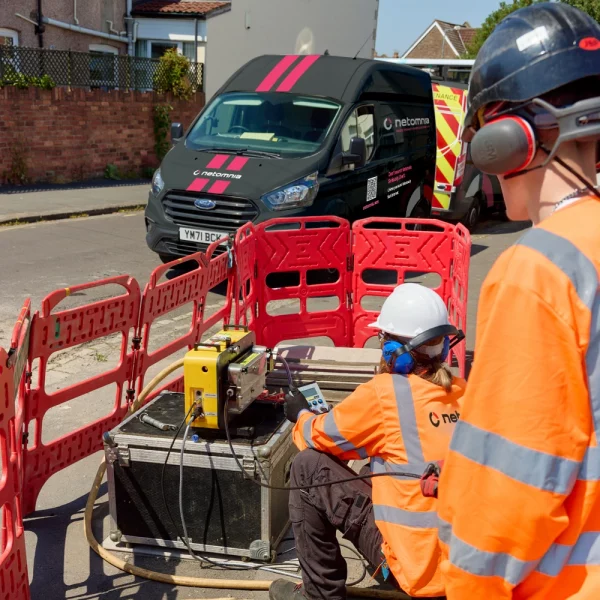
The Competition and Markets Authority has today published the industry responses to their interim report on the proposed £2bn purchase of full fibre broadband network Netomnia (Substantial Group) by the parents of nexfibre and Virgin Media (O2), which was provisionally blocked last month. Nexfibre argues that the third-party responses reinforce concerns that the CMA’s findings relied on speculative assumptions.
Readers may recall that the CMA’s provisional ruling effectively rejected some of nexfibre’s claims and found that the transaction amounted to a relevant merger situation (RMS), which they said was “expected to result in a substantial lessening of competition (SLC) in the wholesale supply of fixed broadband services.” The CMA’s report was perhaps surprisingly tough and left little room for nexfibre to propose potential remedies.
Nexfibre responded to this by describing the CMA’s view as being “fundamentally flawed” and complaining that its “conclusions rely on counterfactuals that do not reflect the commercial and financial reality of the UK fibre market” (i.e. the main counterfactual being the alternative of a merger between Netomnia and CityFibre).
Advertisement
Crucially, nexfibre reached the conclusion that there were no viable remedies that could “address the CMA’s current counterfactuals, and on that basis we have not submitted one“. Instead, the network operator responded by calling on the CMA to effectively review the counterfactual, which they felt would show that CityFibre’s financial situation had changed and the operator may thus struggle to mount a serious bid for Netomnia.
The position had some merit as CityFibre are still in the process of trying to shore up their financial foundations, which among other things included raising c.£900m in equity from shareholders to drive fresh consolidation, albeit at the same time as agreeing a potentially huge c.£2bn write-down on their debts (banks would convert some of their debt into equity). Big questions remain over the viability of this, which has put pressure on CityFibre to show they can deliver.
Rajiv Datta, CEO of nexfibre, said:
“The third-party responses published today speak for themselves. The clear weight of industry opinion reinforces our position that the CMA’s Interim Report is based on highly speculative assumptions that lack evidence and need to be re-examined.
Those counterfactuals were flawed from the outset, and subsequent market developments have further exposed just how untenable they are. CityFibre’s ongoing massive debt restructuring and Virgin Media O2’s decision to halt further fibre investment make the facts increasingly impossible to ignore.
The UK broadband market is too important to get this wrong. The writing is on the wall. The CMA must confront the reality in front of it, rather than condemn the sector to further uncertainty and underinvestment on the basis of counterfantasy.”
As it stands we’re currently awaiting the CMA’s next update, which on the basis of their interim report still seems more likely than not to block nexfibre’s agreement. Despite this, quite a few of the third-party responses to their provisional ruling do echo some of nexfibre’s concerns, albeit not all of them (e.g. CityFibre, obviously). The official responses from nexfibre and Netomnia will follow soon, although they’re unlikely to hold many surprises.
Responses to the interim report
- (6.11.26)
- (6.11.26)
- (6.11.26)
- (6.11.26)
- (6.11.26)
- (6.11.26)
- (6.11.26)
- (6.11.26)
- (6.11.26)
Just by way of a few examples. CommunityFibre complained that the CMA’s Inquiry Group had “underestimated the severe chilling effect that prohibiting market-led consolidation will exert” and “constructed an unviable, multi-layered counterfactual … none of which reflect prevailing capital market conditions or operational realities.”
Advertisement
Gigaclear said they also had “concerns about the CMA’s underlying analysis“, before warning that it ignored how CityFibre still had not yet secured committed funding for the transaction and that the CMA’s position risked putting a chilling effect on investment in the sector.
Grain Connect similarly expressed their view that the CMA’s counterfactual was “implausible” and pointed to how the “most important dynamic of competition is that between the Altnets and Openreach; competition between the Altnets and each other is secondary.”
Trooli said they remained “neutral on the outcome of the inquiry and expresses no concluded view on whether the statutory substantial lessening of competition test is met“, but they also called upon the CMA to articulate a “clear and stable framework” in their final ruling that “enables investors, before committing capital, to understand the rules governing the credible routes through which UK fibre networks may achieve sustainable scale“.
There’s also a general response from several unnamed “Third parties“, which said they were “surprised by the CMA’s findings in the Interim Report” and called on the regulator to re-visit its counterfactuals. “A hypothetical acquisition of Substantial by CityFibre is by no means secured,” warned the group. But it’s hard to assign much credibility to this particular response while the parties concerned choose to remain anonymous.
Advertisement
The GMCA’s response goes in a different direction and states how they remain of the view that the deal “risks materially weakening infrastructure competition in Greater Manchester. The acquisition would remove Netomnia as an independent network builder and bring it within a group closely aligned with Virgin Media O2, reducing the number of independently controlled full-fibre networks able to compete for wholesale customers, investment opportunities and future deployment.”
Finally, CityFibre largely stuck to its guns, supported the regulator’s provisional view and reiterated how the CMA were already “well aware” of their financial position while conducting the Phase 2 review. “The significant volume of evidence relied upon by the CMA clearly shows that CityFibre would have obtained the necessary funding to acquire Substantial and Substantial’s shareholders were highly motivated to reach terms.” But of course, the best way to show that now is to deliver the necessary financial agreement to show they could support such an investment today.
CityFibre also pointed out that, absent the Transaction, VMO2 still has “clear incentives to continue upgrading its cable network to FTTP“. The catch being that VMO2’s latest results have since stopped that upgrade programme and announced a massive cost cutting drive.
The final decision will ultimately have a big impact across the sector as many other altnets had been anticipating that approval of the nexfibre deal would help to open the floodgates to further market consolidation. But now any agreements between larger players may need to pay much closer attention to the negative competitive impacts of network overbuild between parties.
All eyes remain on the CMA, which will effectively now decide how competition and consolidation will evolve in today’s market. Take note that more responses may be published in the coming days.



Mark is a professional technology writer, IT consultant and computer engineer from Dorset (England), he also founded ISPreview in 1999 and enjoys analysing the latest telecoms and broadband developments. Find me on X (Twitter), Mastodon, Facebook, BlueSky, Threads.net and Linkedin.












Advertisement
Leave a Reply
Privacy Notice: Please note that news comments are anonymous, which means that we do NOT require you to enter any real personal details to post a message and display names can be almost anything you like (provided they do not contain offensive language or impersonate a real person's legal name). By clicking to submit a post you agree to storing your entries for comment content, display name, IP and email in our database, for as long as the post remains live.
Only the submitted name and comment will be displayed in public, while the rest will be kept private (we will never share this outside of ISPreview, regardless of whether the data is real or fake). This comment system uses submitted IP, email and website address data to spot abuse and spammers. All data is transferred via an encrypted (https secure) session.
















Probably damned if they do and damned if they don’t. Still, they get paid, they should expect some flack.
Not withstanding the emergency situation, the government intervening to force through the BT takeover of TalkTalk also kind of undermines the case against allowing Nexfibre takeover of Netomnia especially given that the only other suitor doesn’t appear to capable of stumping up the £2bn cash required. Personally I would thought a CityFibre / Netomnia tie up would have created a much better scale competitor against VMO2/Nexfibre & Openreach but the unfortunately the numbers simply aren’t there.
Who said that a takeover of Netomnia is “required” in the first place? And if it is, who says the price tag is £2bn in cash? Do its assets really exceed its liabilities by that much, and who’s valuing the assets?
Many takeovers and consolidations have been done using stock.
The question is whether, given time, a credible 3rd competitor would emerge in the next 12-18 months to validate CMA position/approach, to justify denying VMO2’s parents.
That might be a recapitalised Cityfibre, or some other “unencumbered” investor (seperate from or including one or more UK altnets).
The cautious final outcome would be to deny for a period of (say) 18 months and re-review (CMA to consider duopoly consumer protections if VMO2 parent takes over)
With a early re-review if an potentially credible alternative purchasor emerges or if CityFibre would fall into administration ( VM02 parents could be allowed to “rescue” CityFibre if no other credible options available c.f recent BT/Talktalk rescue)
pretty much no one is building at scale now so it’s not going to happen. it’s just too expensive
Why are Greater Manchester Combined Authority so interested in this deal? Could it be linked to the story published by the Telegraph last weekend relating to their old gaffer and his mates at the Etihad Stadium?
https://www.telegraph.co.uk/news/2026/10/31/burnham-lobbied-broadband-deal-benefit-uae/
Slightly cynical but I can’t help wondering if the other altnets (and their funders) are more concerned that if this deal doesn’t happen, it will be harder for them to sell their own investments in due course..
I agree. There are a few acquisitions that have stalled due to this. If VMO2 / Nextfibre are no longer able to buy it only really leaves Cityfibre left as a buyer. That’s going to help these Altnets get the price they want
Virgin taking their ball back. Altnets keen to see deal which hugely overvalues them proceed.
Can we have a moratorium on the term counterfactual. The word alternative much be better in this context. As neither of the proposed deals has happened yet there are no facts to consider, only speculation.